by Ginger | Oct 3, 2026 | Blog
“Our repetitive suffering… comes from rejecting our own energy when it comes in a form we don’t like.”
~ Pema Chodron, Taking the Leap
This line really jumped out at me while I was going over some older books on my shelf. I’ve been working with the principle of mirrors in my own spiritual practice for many years, but something about the way Pema Chodron phrases this so directly and succinctly really clicked for me.
Many spiritual traditions include the concept that our outer world experiences are an illusion which mirror to us energy we’re resonating. Our judgments, beliefs and emotions about those mirrors reveal what we are holding onto that is unhealed and out of alignment with divine truth.
But even with this understanding, we may still hold onto the perception of the mirror as that over there while this is me here. If I look closely, I may notice similarities, but I may still hold the belief in something “other”. This quote breaks that pattern and is a powerful reminder that the mirror and me are one and the same, presenting in unique forms. When I am in denial about something I’m resonating because of my judgment and fear, the mirror shines a light on it by showing it to me in a way that I might more easily identify or be more willing to see. Once we truly open ourselves to the divine truth underneath the illusion by looking at it directly, free of judgment, we are well on our way to healing the false reality of our separation from Source.
Pema Chodron follows up this raw truth about rejecting ourselves with some insights on how we can begin to heal that judgment and denial. I share a more expanded quote from the same section of her book, with gratitude for her wisdom and insight:
Our repetitive suffering… comes from rejecting our own energy when it comes in a form we don’t like. It comes from continually strengthening habits of grasping and aversion and distancing ourselves…
But if we choose to practice by acknowledging, pausing, abiding with the energy, and then moving on, the power of this is not just that it weakens old habits but that it burns up the propensity for these habits altogether. The truly wonderful aspect of living this way is that it leaves the space wide open for a completely fresh experience free of self-absorption. Right here, exactly where we are, we can live from a broader perspective, one that admits all experiences- pleasurable, painful, and neutral. (Chodron 36)
Chodron, Pema. Taking the Leap. Shambhala Publications, Inc., 2019.
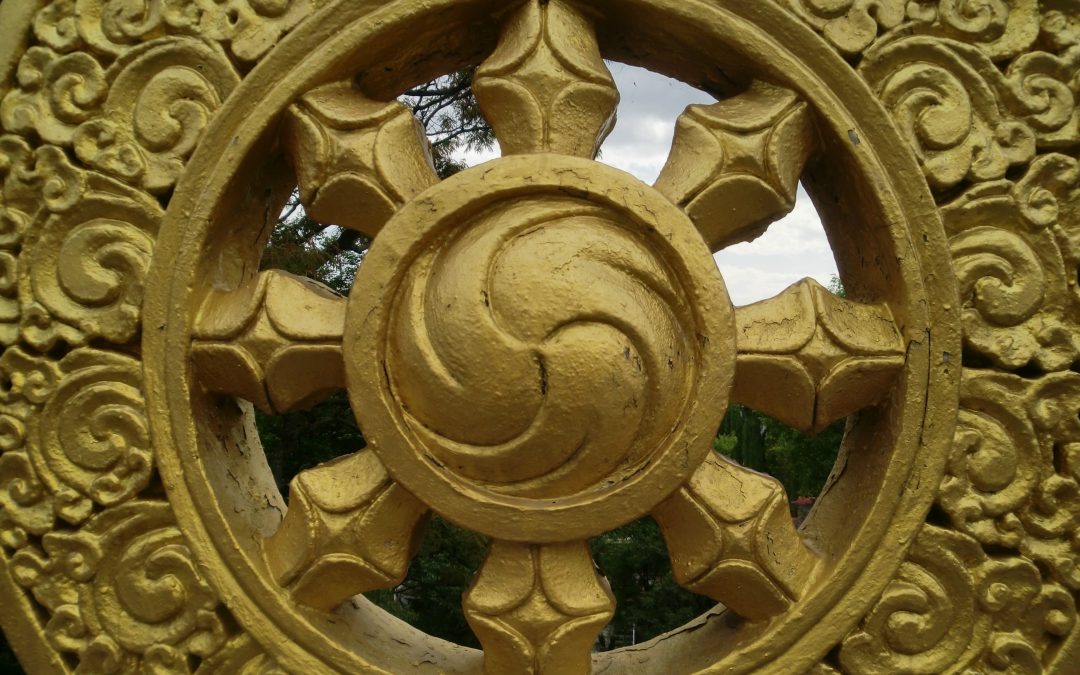
Image by Paramjeet Singh from Pixabay

by Ginger | Aug 30, 2026 | Blog
We all understand on some level that the cycles of life are made of beginnings and endings, sometimes even happening simultaneously. What is sometimes not so easy to identify are times when we think we’re moving forward but are still holding on and not fully allowing the full completion of those endings. Recently, I was feeling stuck in some old energies, perceptions and beliefs that I was struggling to release. I kept trying to “rise above them” as a way to let them go, yet they would resurface. Then, I was guided to allow myself to grieve their loss in order to let them go- to look at each one and grieve the loss of whatever potential they represented to me. This was a bit surprising as my first thought was to focus on more ease and flow or expand with greater detachment. But we cannot ignore or skip over an experience as a path to healing.
As I worked with this insight, I was reminded of a Buddhist parable about Marpa the Translator, a 10th century meditation master:
Marpa’s only son died suddenly as a young man and Marpa wept openly at the loss. Some of his students questioned his grief, pointing out that he himself had given many teachings on death as an illusion and the impermanence of the physical world. Marpa replied, “Death is an illusion. And the death of a child is an even greater illusion.”
Spiritual mastery does not require that we deny our human emotions but rather acknowledge and allow them, be present with them even as we are letting them go. Marpa’s reply teaches that the experience of death is indeed an illusion and so is the experience of grief about death. But we can only understand the impermanence of an illusion if we do not resist it or cling to it. Judging our emotions is a sure way to get stuck in them. Allowing our emotions without being bound by them is a powerful and freeing spiritual practice.
image created by AI

by Ginger | Aug 1, 2026 | Blog
I’ve been meditating with this question recently and it has brought up some interesting challenges and triggers along with some powerful insights. It has helped me identify some perceptions and beliefs I’m reluctant to let go, even they are no longer a match for me now. It has also helped me understand reasons and causes for reluctance to step forward and respond in certain situations.
Someone once shared with me the practice of changing “responsible” into “able to respond”. We sometimes mistake responsibilities with obligations. An obligation is a duty, task, something that can feel like it has power over us. We can choose to see responsibilities as opportunities to contribute and be of service, as moments when we are in a position to participate as a member of a community, whether that’s a partnership, a family, a neighborhood, the world or the universe.
Divine Responsibility is being able (and willing) to respond with our whole selves, not just our physical actions but our whole energy and intention. We can trust in the Divine Wisdom of the whole and let go of the need to control other people’s choices. Divine Responsibility is about discerning when it’s our place to take action and when it’s time to step back and give someone else the opportunity. It is free of judgment if no one else does step up. The focus becomes, “What can I do?” rather than, “What did you do?” We can focus on what we can each offer and do it with joy for the greater good, rather than tallying up a list of who did what or worrying about whether our contributions measure up.
Are you mistaking responsibilities for obligations? What do you need to shift within to free yourself of obligation consciousness and step into your divine responsibilities? Take a few moments to meditate on these questions: What are my true responsibilities?
Image by GLady from Pixabay
by Ginger | Jun 28, 2026 | Blog
Slowing down, being patient and honoring divine timing has been coming up for me recently. Needs and desires for accomplishment, even spiritual accomplishment, keeps us in a state of unease and unrest. I was guided to revisit a blog post by Marsha Hankins, Stay Present and Reverent in the Moment, in which she quotes a beautiful passage by Thich Nhat Hanh that speaks to me deeply. I share this quote with you here:
The ability to be fully present and reverent in each moment is a skill every spiritual master practices. To quote the beloved Master Hanh:
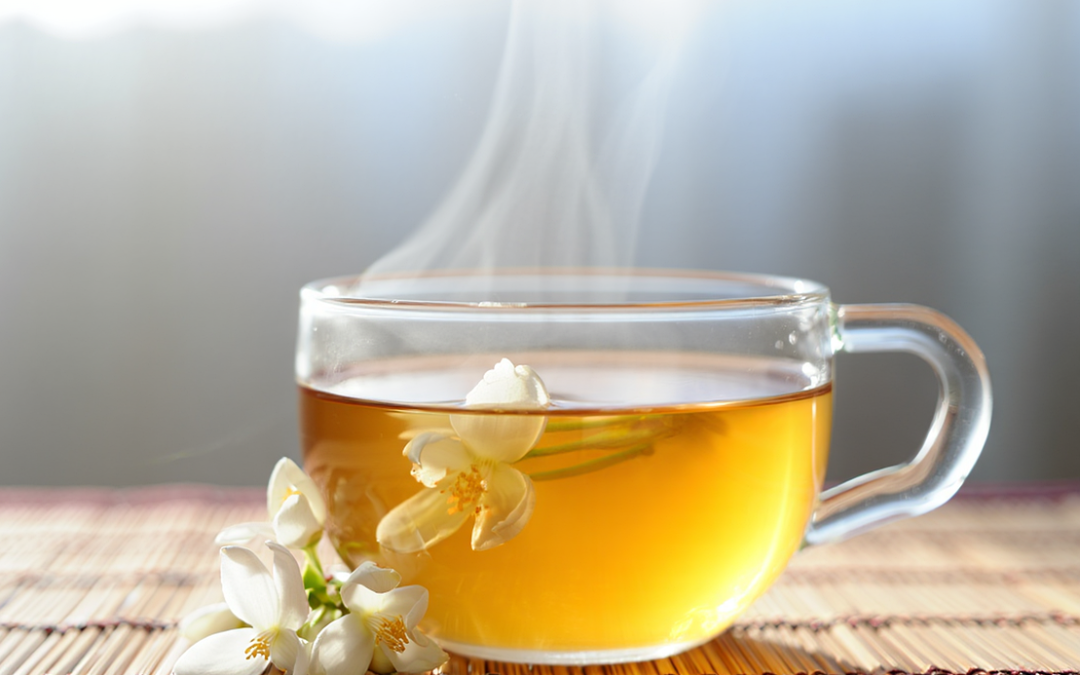
“Drink your tea slowly and reverently, as if it is the axis on which the world earth revolves- slowly, evenly, without rushing toward the future.”
Do not get caught in the illusion of what is important or in the fear of what might happen. Do not give your power to the structure by which others live their lives. Instead, drink your tea slowly and know the importance of who you are in each moment. Be reverent in every thought and deed. Trust in the divine plan and let reverence be your focus this week, this month, this year.
Image by fatema nur from Pixabay

by Ginger | Jun 2, 2026 | Blog
Who am I as Love? I’ve worked with this question in the past and it has recently come up for me to revisit. In Standing in the Light®, we work with resonances through our intention, specific frequencies of being such as Love, Wisdom, Power and Peace to help us remember who we truly are. These are feeling states, reminding us how it feels to be all the flavors of the rainbow that is Source. Asking this question helps me to envision and understand these feeling states in action in my everyday life. If I were experiencing myself as the living embodiment of Love, what would I do? What would I say? What choices would I make? How would I feel?
You can pose this question to yourself for any resonance you’re guided to work with. What would Peace choose in this moment? How would Compassion respond in this situation? What does Wisdom know about this experience? And so on.
Working with this exercise helps me reach a deeper experience of full, living mastery- fully conscious embodiment as Source in motion. It can become part of your practice as a reminder of who you are in every action you take. Who are you as Love?
image is AI created
